The Meaning of Monster Dreams: What They May Reveal
This article may contain affiliate links. We may receive a commission if you make a purchase through them, at no additional cost to you.
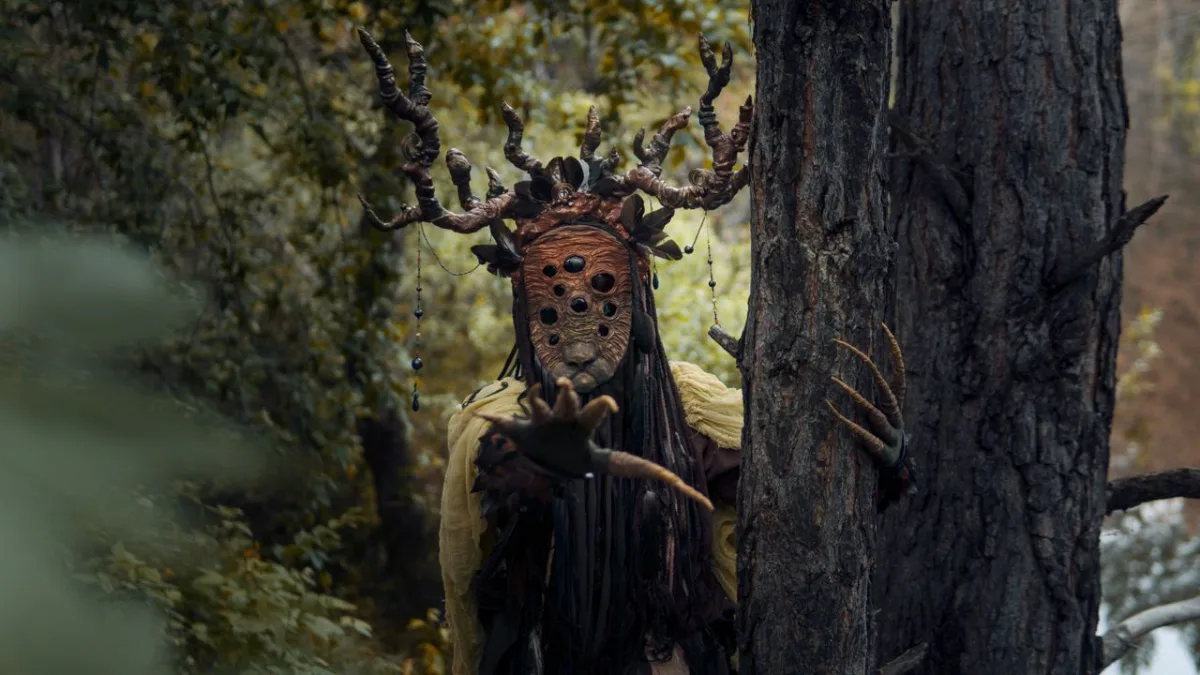
The Meaning of monster dreams is one of the most popular interpretations in the fields of psychology, symbolism, and spirituality. Even if, at first glance, a monster image seems “too literal,” in reality the brain usually doesn’t create senseless pictures. During sleep, emotions, memories, and the day’s tensions blend into scenarios that can feel frightening at times, but may actually hide messages about limits, fears, needs, relationships, or changes you haven’t processed yet.
Monsters in dreams can be aggressive, they can chase you, talk, or appear in a strange form without a clear outline. No matter the details, your reaction (fear, running away, paralysis, or courage) is an important clue: the dream isn’t just describing “a danger,” but how you relate to it. That’s why the Meaning of monster dreams isn’t limited to “what will happen,” but to “what you’re experiencing” and “what your mind is trying to show you.”
Why do we dream monsters? An introduction to the Meaning of monster dreams
- Monsters as symbols: fear, loss of control, perceived threats
Monsters are most often symbols. They can represent fear of failure, the dread of rejection, the pressure you feel vulnerable to, or the sense that “you no longer have control.” When the mind can’t easily translate a complex emotion into language, it turns it into powerful images: huge creatures, shadows, faceless entities, or figures that invade your personal space.
- How the brain works during sleep: emotions, memory, dream scenarios
During sleep, the brain processes information and emotions. Working memory relaxes, and the connections between memories, bodily sensations, and emotional experiences become more “free.” That’s how a stressful conversation, a message received, an avoided discussion, or chronic unease can be rearranged into a dream scenario. In this context, the monster can be the result of a “combination” between what you feel and what you imagine as a danger.
The Meaning of monster dreams: popular psychological interpretations
- The monster as a projection of accumulated anxiety and stress
One of the most common interpretations is that the monster represents accumulated anxiety. When stress doesn’t get released, it looks for an outlet. The dream can become a safe space (even if it looks violent) where emotions are “simulated” without real consequences. For example, if in everyday life you avoid confrontation, the dream may bring a “monster” that forces you to stop and look at its threat.
- The “shadow” effect (the part of the self you don’t accept) on dream symbols
In Jungian psychology, the “shadow” is the part of us that we don’t accept or that we consider inadequate: anger, envy, unexpressed desires, vulnerability, shame. The monster may be exactly this unintegrated psychic energy. It doesn’t mean that “you are a monster” in real life, but that there’s a part of you you don’t fully recognize. The dream makes it visible in an extreme symbol precisely to grab your attention.
Monsters in dreams and emotions: what your reaction says
- Fear, running away, paralysis, or courage: indicators of your real state
The Meaning of monster dreams becomes clearer when you look at your reaction. If you get scared and run, the dream may suggest avoidance of a problem. If you feel paralyzed, it may point to being blocked, overextended, or the feeling that “you have no options.” If, on the other hand, you face the monster or drive it away, it can mean you’ve started taking responsibility for a difficult part of life and building your courage.
- Shame vs. anger: how it shapes the dream’s message
It’s not the same to feel ashamed in a dream as it is to feel angry. Shame can point to themes like self-criticism, fear of judgment, or the feeling that “you’re not enough.” Anger may indicate a violated boundary or a need for protection. The monster then becomes a metaphor for the emotional energy you’re experiencing—either as shame or as anger.
Dream context matters: place, time, and atmosphere
- House, street, forest, or water: different meanings for the same creature
The location where the monster appears changes the interpretation. A house can symbolize intimacy, family, and your inner self. If the monster invades the house, it may suggest that a problem has “entered” your personal space. A street can represent social life, direction, or the path you’ve chosen. A forest is often linked with the unknown, confusion, or searching. Water can suggest deep emotions: if the water is murky, your feelings are mixed; if it’s calm, there may be a form of balance even in the face of fear.
- Darkness, light, rain, or heat: how it shifts the tone of the interpretation
The dream’s atmosphere influences the message. Darkness can heighten insecurity and vague fear. Light may indicate clarity, protection, or the moment when you start to understand what scares you. Rain can suggest emotional release, tension that builds up, or a kind of cleansing. Heat can show acceptance, closeness, safety—or, paradoxically, it can make the monster feel more “uncomfortable” if it appears in a space that should feel comforting.
Common scenarios and the Meaning of monster dreams
- A monster is chasing you: pressure, avoiding a problem, a sense of urgency
A monster that chases you is often a symbol of pressure and urgency. It may be about a decision you keep postponing, a conversation you’ve been avoiding, or a responsibility that “won’t leave you alone.” The fact that the monster comes from behind can suggest the issue comes from the past or from a consequence you’ve been delaying. If you run, the dream reflects how you handle stress: either through avoidance or through action.
- Killing or confronting the monster: facing a fear and transforming
If you manage to face or “defeat” the monster, the dream may suggest a stage of transformation. It doesn’t necessarily mean the problem disappears completely, but that your relationship to it changes: you become more aware, more firm, or more prepared. Sometimes the monster doesn’t die—it changes. That can show fear turning into understanding.
Monsters in different forms: how the message changes
- Monster with a human face: inner conflict, tense relationships, identity
A monster with a human face may indicate that the dream’s theme is connected to people: a conflict, a tense relationship, someone who influences you, or a part of yourself you recognize. A human face can make the symbol feel more “personal,” meaning the fear isn’t only abstract—it has an identifiable source.
- Strange creatures without a clear shape: confusion, uncertainty, diffuse fear
Faceless, shapeless creatures can suggest uncertainty. When you don’t know “why” you’re afraid, the mind may create a symbol without a clear outline. Fear is present, but the cause isn’t defined. This is an important clue: it may be a sign that you need to clarify your emotions and give them a name—anxiety, helplessness, loneliness, pressure, lack of control.
Color, size, and details: subtle clues
- Color (black, red, white, green) and the link to emotional intensity
Color can reflect the intensity of emotions. Black is often associated with fear, loss of meaning, or hopelessness. Red may indicate anger, alarm, impulse, or perceived danger. White can suggest purity, cold confusion, or the feeling that something doesn’t “fit” naturally. Green may point to envy or jealousy—or, sometimes, to the idea of healing (depending on context). There are no absolute interpretations, but colors can be clues to the dominant emotion.
- The monster’s size: how “big” the problem seems in your everyday life
A huge monster can symbolize a problem you perceive as overwhelming. If the monster is small, it may suggest a fear you’re underestimating or a problem that, even if it seems minor, still drains your energy. Also, if the monster grows during the dream, it can show that your anxiety intensifies as time passes.
If the monster talks or threatens you
- Clear messages vs. incomprehensible words: how aware you are of your fears
If the monster speaks clearly, the dream may signal that your fears are already formulated in your mind: “you know what you’re afraid of.” If it speaks incomprehensible words or murmurs, it may indicate that the emotion exists, but you haven’t managed to translate it into coherent thoughts.
- Repeated threats: anticipatory anxiety and obsessive thoughts
Repeated threats in a dream can reflect anticipatory anxiety: you fear something that “might” happen. When the messages repeat, your mind may try to prepare you—but it can also fall into an obsessive loop. In such cases, the Meaning of monster dreams may be related to the need to reduce rumination and regain control over your thoughts.
The dream with a monster that helps you or protects you
- Protection as a symbol of defense mechanisms: “you’re not ready yet”
A monster that protects you may seem paradoxical, but it’s a common reason for recurring dreams with strong symbols. It can represent defense mechanisms: your mind keeps you away from an emotion that’s too intense, too soon. It’s as if your inner part says: it’s not time yet to fully enter pain, truth, or change.
- The monster as an ally: inner resources, healing, and accepting difficult parts
In some dreams, the monster becomes an ally. That can signal that you’ve started integrating your fears. Instead of fighting them, you use them as resources: you become more attentive, more lucid, and more capable of setting boundaries. In this way, the monster can be a metaphor for a part of you that, even though it appeared “uncomfortably,” has the purpose of keeping you safe.
The Meaning of monster dreams depending on relationships
- The monster appears around a person: influences, tensions, or boundaries
If the monster shows up next to someone, the message may be about that person: you feel threatened, controlled, or overwhelmed by the dynamic between you. It can also be about boundaries: the monster may represent an influence you need to reduce or define more clearly.
- The monster as a familiar figure: memories, trauma, or repeated patterns
Sometimes the monster looks like someone you know. That can suggest that the dream’s theme is linked to memories or trauma—or to a repeated pattern. The mind may bring up an old experience and “dress” it as a monster precisely because the associated emotion is intense.
Monsters and change: why they appear during transition periods
- Major changes (job, moving, breakups) and the growth of anxiety
During transition periods, the brain processes far more unknowns. Change requires adaptation, and adaptation brings anxiety. The monster can become a symbol of the “unknown” or of perceived risk. For example, a move can trigger a dream where a monster “invades” your space: your mind shows you’re on alert.
- The dream as “emotional training”: preparing for a new stage
Sometimes the dream works like practice. The brain simulates scenarios to help you build reactions. If, in the dream, you face the monster, it may be a sign that you’re preparing to handle a new stage. If you run, it may indicate that you need support or a clearer plan.
Spiritual and symbolic interpretations (without absolutizing)
- The monster as a test, lesson, or symbolic warning
In spiritual interpretations, the monster can be seen as a “test” or a lesson. The warning shouldn’t be understood literally, but as an invitation to introspection: “what do I need to learn from fear?”, “what am I being asked to recognize?” It helps to keep a gentle, realistic approach: the dream isn’t a sentence—it’s a symbol.
- Rituals of introspection: dream journal, reflection, meditation
You can use simple practices: write down the dream right after waking, reflect on the dominant emotion, and look for what matches the period you’re going through. A short meditation or prayer (if it resonates with you) can help regulate your emotional state after an intense dream.
When the dream becomes recurring: what’s worth investigating
- A repeating theme: an unresolved issue or an avoided emotion
If the monster dream comes back, there’s usually an unresolved theme. It might be a fear you keep putting off, a conversation you don’t have, or a boundary you haven’t stated. Recurrence is a sign that your mind is trying to get your attention with persistence.
- Signs it’s time to ask for help: persistent anxiety, affected sleep
If the dreams are very frequent, if they wake you up scared, or if they affect your sleep and everyday well-being, it may be useful to talk to a psychologist or therapist. Not because “you’re in danger,” but because it’s worth understanding your emotions and finding strategies that bring you calm and control.
How you can interpret the dream yourself: practical steps
- Write down the details: who, where, how you felt, and what happened at the end
The first step is to write it down. Without interpreting yet. Notice: where was the monster, what was it doing, what did it look like, what color was it, what emotion you felt, and how it ended. The ending is often the key: did you manage to escape? Did you confront it? Were you saved?
- Ask questions: what scares you right now, what is the “monster” in your real life
After you gather the details, ask questions: What stresses me lately? What do I avoid? What boundary haven’t I stated yet? What part of me feels like it isn’t accepted? Don’t look for the perfect answer—choose one that fits the dominant emotion.
Short interpretation examples (for typical scenarios)
- “I hide in a room and the monster smashes the door”
A sign of pressure and a boundary being crossed. It may indicate that you feel “assaulted” by a problem and that avoidance no longer works. A broken door suggests you need to reaffirm your boundaries or address the theme directly.
- “The monster is childish, but it’s dangerous”
Fear of vulnerability and the need for safety. A “childish” monster can show that the issue is linked to an old emotion that’s still active: the need for protection, shame, or fear of being hurt.
Conclusion: the Meaning of monster dreams as a tool for self-knowledge
- The monster isn’t necessarily a prediction—it’s a symbol of your emotions
The Meaning of monster dreams shouldn’t be treated as a literal message about the future. Most often, the monster is a symbolic form for fear, anxiety, boundaries, internal conflicts, or changes.
- Using the dream for clarity: understand the fear, adjust your direction, heal
When you interpret your dream with patience, you can turn fear into information. You understand what’s weighing on you, what you’re avoiding, and what you need to do next. In this way, the dream becomes a tool for self-knowledge: it helps you see your emotions, adjust your direction, and build a safer path toward healing.
Related articles
The Meaning of Dreams About Clowns: What It Means When You Dream of Clowns
The meaning of dreams about clowns depends on emotions, context, and details: they can point to change, a social mask, confusion, or emotional release. What it means when you dream of clowns becomes clear when you analyze the clown’s actions and how you feel in the dream.
Read →
The Meaning of Avalanche Dreams: What They Mean and How to Interpret Them
The meaning of avalanche dreams can reflect stress, loss of control, or accumulated tension—but it can also point to a possible transformation. Interpretation depends on details: the emotion in the dream, the scene (far away, trapped, saved), and what’s happening in your life.
Read →
What It Means When You Dream About a Doctor: Interpretations in Plain Terms
What it means when you dream about a doctor: it usually symbolizes the need for care, clarity, and healing—especially when you’re under stress or looking for solutions. The interpretation depends on the emotions in the dream and the context (doctor’s office, hospital, good or bad news).
Read →