
What It Means When You Dream of a Natural Disaster: Interpretations and Signs
This article may contain affiliate links. We may receive a commission if you make a purchase through them, at no additional cost to you.
Dreams about natural disasters can be unsettling, but they are rarely literal “omens.” Most of the time, they work as a symbolic language of the psyche: the mind translates intense emotions, accumulated tension, or upcoming changes into dramatic images. When a quake, a flood, a storm, or a fire appears, the message isn’t about “the end of the world,” but about how you feel inside—and what needs your attention.
Why we dream about natural disasters and what they might symbolize
- The dream as a mirror of emotions: anxiety, stress, the need for control. Disasters often show up when everyday life becomes unpredictable: pressure at work, conflicts, changes, worries about health or safety. In the dream, everything “gets out of control,” and that feeling may reflect your need for stability and the difficulty of handling uncertainty.
- Universal symbols: water, fire, earth, wind—and their meaning in the psyche. Natural elements have recurring meanings in psychological and symbolic interpretations:
- Water: emotions, psychological depth, cleansing, or being overwhelmed.
- Fire: transformation, energy, the desire to “burn” old patterns, but also anxiety related to control.
- Earth: stability, foundations, the body, “roots” (family, identity, values).
- Wind: rapid change, mental agitation, impulses, restlessness.
What it means when you dream of a natural disaster (general interpretation)
- Imminent changes: fear of loss vs. new beginnings. The dream may signal a period of transition. Sometimes the mind focuses on what could be lost (security, relationships, status, your rhythm), and other times on the fact that the old way of living no longer works. That’s why the message can be twofold: fear of loss and openness to new beginnings.
- Inner warning: signals about limits, resources, and safety. The disaster can be an “inner alarm” telling you that you’ve crossed a boundary: you’ve burned out, ignored your own needs, postponed an important decision, or lived too much in “survival mode.” In this sense, the question “What does it mean when you dream of a natural disaster?” becomes: which part of your life needs stabilization?
Meanings depending on the type of disaster
- Earthquake: instability, fear of change, the “shaking” of old certainties. If you dream of an earthquake, it may be connected to the feeling that the foundation (plans, relationships, your professional identity) could change. An earthquake can also symbolize the need for inner reorganization: rebuilding your emotional “foundation.”
- Flood: overwhelming emotions, cleansing, release, or the feeling of being “swallowed” by problems. Water rising and not stopping can reflect the buildup of stress. If, in the dream, you find an exit or manage to save yourself, the message may be about release and your ability to manage emotions.
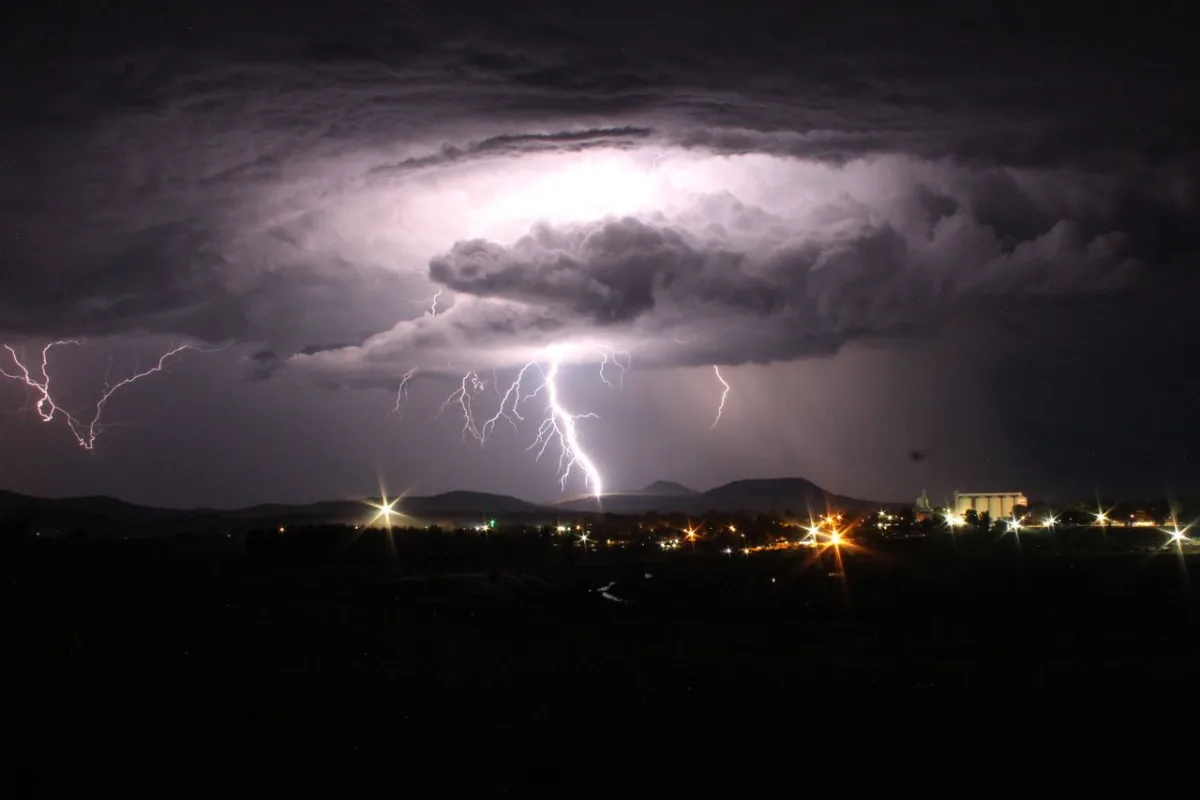
- Storm / tornado: accumulated tension, inner conflict, strong impulses. Strong wind and chaotic trajectories may suggest that your mind is moving “in circles,” or that you have many unresolved conflicts. A tornado, in particular, can symbolize concentrated energy: an intense state (anger, fear, longing) that “pulls” you toward a direction.
- Fire: transformation through pain, the desire to “burn” old patterns, anxiety related to control. A fire may appear when you feel vulnerable or when you face an inevitable change. If, in the dream, you try to stop the fire, it may indicate the effort to keep an emotion or situation under control as it grows.
- Landslide: blockages, fear of collapse, difficulties that build up gradually. Unlike a sudden event, a landslide suggests accumulation: things left unaddressed that “break loose” over time. It can be a sign that you need to intervene early, not when everything collapses.
What it means when you dream that you’re trying to save yourself
- Effort and resilience: your reaction in the dream reflects how you handle crises. If you run, look for exits, shout for help, or find solutions, the dream may highlight your resources for adapting. Even if the situation seems impossible, the fact that you act indicates your ability to cope.
- Feeling successful vs. failing: how much trust do you have in your own resources. When you manage to save yourself, the message may be: “you have more control than you think” or “you can get through this period.” If you fail in the dream, it doesn’t necessarily mean a negative outcome in real life; it may simply suggest that you feel overwhelmed right now and need support, planning, or clarity.
Interpreting the dream where someone else is witnessing the disaster
- The fact that you’re not at the center: fear of losing someone or responsibilities. If you see someone else in danger, it may reflect your concern for others’ safety. Sometimes this type of dream appears when you feel that you “have to” protect or fix things—even when it’s not really up to you.
- You care about others: empathy, excessive worry, or the need for protection. The presence of other people in the dream can indicate deep empathy, but also a tendency to take on too much. The dream may be a sign to set boundaries: caring, yes—but without completely exhausting yourself.
Dreams with victims, destruction, and chaos: how they connect to everyday life
- Trauma and stress: when the mind processes events, tension, or memories. Images of victims and destruction may appear after difficult periods, after news that affected you, or after personal experiences. The mind tries to process emotions you kept “in the background.”
- Fear of consequences: worry about the future, guilt, or pressure. Chaos can symbolize the fear that “everything will fall apart,” but it can also point to guilt (for example, “I didn’t do enough”) or pressure (“I don’t have time to fix it”). In this context, the dream becomes a mirror of anxiety, not a verdict.
The role of location: at home, at work, in an unfamiliar city
- At home: emotional vulnerability and personal boundaries. If the disaster happens in your home, it may reflect the fear that your emotional intimacy or safety is threatened. It can be connected to relationships, family, comfort, your body.
- At work: pressure, changes within the team, fear of professional instability. An office where something dramatic happens can symbolize instability (projects, restructurings, evaluations) or communication tensions.
- In an unfamiliar city: adaptation, fear of the unknown, searching for identity. When the space feels unfamiliar, the dream may signal a transition phase: you feel “without a map,” without landmarks, and you’re trying to define your direction.
The meaning of details in the dream
- Weather and intensity: the stronger the storm, the stronger the emotion in real life. The intensity of the disaster can be proportional to how much emotional weight you carry. A small storm may suggest a manageable issue; a devastating one may indicate burnout or chronic tension.
- Sound (noises, sirens): perceived urgency, ignored signals, or an inner alarm. Sirens, thunderous noises, or screams can represent “signals” you’ve been ignoring: an instinct, a need, a conversation you’ve put off.
- Lack of escape routes: the feeling that you have no control, psychological blockage, or postponed decisions. If there’s no way out in the dream, it may reflect a period when you feel trapped between limited options.
- The presence of water / fire / earth: which “element” dominates the dream’s theme. The dominant element can show what type of emotion needs attention: water (overwhelming emotions), fire (transformation and control), earth (stability and foundations).
What it means if the disaster repeats or worsens in the dream
- Recurring patterns: the same emotional issue keeps coming back until it’s integrated. If you have the same type of disaster, it may indicate that the underlying problem hasn’t been “resolved” psychologically yet. The dream repeats the theme until you recognize your emotion and take action.
- Escalation: unresolved stress, burnout, or the buildup of tension. When the dream intensifies every time, the message may be: “you’ve reached your limit.” It may be the moment to reduce your load, ask for help, or make concrete changes.
Psychological interpretations (Carl Jung and the modern perspective)
- Symbols of the unconscious: the disaster as an expression of the “shadow” or tensions. In Jungian language, the “shadow” includes parts of you that you don’t recognize or reject. The disaster can be the unconscious mind’s way of bringing to the surface tensions you’ve kept hidden.
- Archetypes: destruction–transformation, symbolic death–rebirth. The disaster may signal a symbolic “death”: the end of an old identity, an old way of thinking, or an emotional structure. After destruction comes transformation—even if it hurts.
Spiritual interpretations: a sign, purification, and a change of direction
- Energetic cleansing: releasing what no longer serves you. In spiritual interpretations, the disaster can be seen as a purification process: “heavy” energy, habits, attachments, or fears are being released—freeing you from what blocks you.
- A gentle warning: re-evaluating your path, values, and choices. The dream can be a sign that your current direction no longer fits. Not necessarily that “something bad is coming,” but that you need to adjust: values, relationships, routine, priorities.
What the dream means for the person having it (depending on context)
- If you’re going through changes: the mind translates uncertainty into dramatic images. When life is moving (moving houses, changing jobs, changes in the family), the brain may generate extreme scenarios to reflect how unstable you feel.
- If you’re in a period of stress: the disaster becomes a “metaphor” for pressure. Without an emotional space to process things, stress shows up during sleep through images of risk and loss.
How to figure out what message your dream is sending (practical method)
- Write down your emotions: fear, anger, sadness, relief—these are the key to interpretation. What you felt mattered more than the “event” details.
- Reconstruct the details: where it happened, who was there, what you did, and how the dream ended. Whether you were saved or got stuck, whether you were calm or in panic—these can all point to the direction of the message.
- Compare it with real life: what problem matches in intensity and theme? Ask yourself: “Where do I feel my foundation shaking?”, “What overwhelms me?”, “What am I trying to control too much?”
What to do after a dream like this: tips for calm and clarity
- Breathing and grounding: reduce anxiety right after waking up. In the first minutes, return to your body: breathe slowly, notice sensations (feet on the floor, hands, the room’s temperature). Then tell yourself: “It was a dream. I’m safe now.”
- Dream journaling and reflection: turn the image into understanding. Write down what happened, what emotion you felt, and what real-life issue it might correspond to. After a few days, you’ll see the pattern more clearly.
- An action plan: if the dream reflects a real problem, create small steps. You don’t have to fix everything at once. Choose one concrete aspect: a conversation, a boundary, a reorganization, a request for help. Over time, the psyche settles.
When it might be a good idea to talk to a specialist
- If the dreams become recurring and affect your sleep or daily functioning. If you constantly wake up scared or have trouble resting, it’s worth getting an evaluation.
- If there are traumas, panic attacks, or post-event stress. In these cases, a psychologist or psychotherapist can help you process emotions and reduce the intensity of nightmares.
Frequently asked questions about “What it means when you dream of a natural disaster”
- Is it a warning about the future, or just an emotional symbol? Most often, it’s an emotional symbol: it reflects tensions, fears, or changes. If you have strong anxiety, the dream can act as a signal to take care of your well-being—not as a prophecy.
- Why do I dream about disasters even if I don’t feel in danger? Because the danger in the dream is metaphorical: it may represent loss of control, fear of instability, or accumulated stress. The brain “dresses” emotions in dramatic images.
- What does it mean if I’m calm in the dream, or if panic takes over? Calm may suggest that even though the situation seems difficult, you have resources or an inner strategy. Panic may indicate that you feel overwhelmed in real life or that you need support and clarity.
Conclusion: if you’re wondering “What does it mean when you dream of a natural disaster?”, the most useful answer is to view the dream as a message about emotions and limits. The disaster shows where something is “shaking” inside—stability, safety, control, or direction. With attention, reflection, and concrete steps, the dream can become a tool for understanding, not a source of fear.
Related articles

The Meaning of Dreams About Clowns: What It Means When You Dream of Clowns
The meaning of dreams about clowns depends on emotions, context, and details: they can point to change, a social mask, confusion, or emotional release. What it means when you dream of clowns becomes clear when you analyze the clown’s actions and how you feel in the dream.
Read →
The Meaning of Avalanche Dreams: What They Mean and How to Interpret Them
The meaning of avalanche dreams can reflect stress, loss of control, or accumulated tension—but it can also point to a possible transformation. Interpretation depends on details: the emotion in the dream, the scene (far away, trapped, saved), and what’s happening in your life.
Read →
The Meaning of Monster Dreams: What They May Reveal
The Meaning of monster dreams often reveals fears, anxieties, and parts of yourself you haven’t fully accepted. Interpretation depends on your emotion, the context, and how you respond in the dream.
Read →